

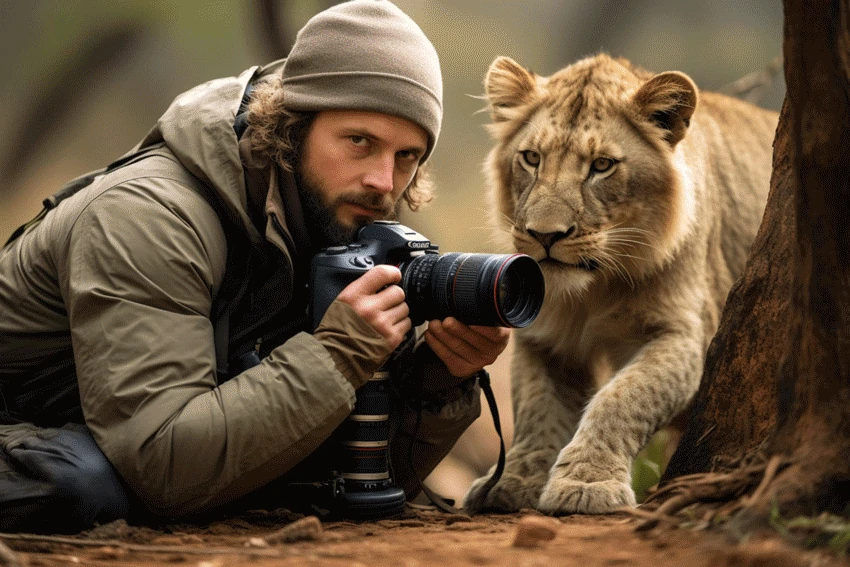
How many people are looking to become professional wildlife photographers? Developing fundamental photography skills, along with learning about animal behaviour, is essential. These also involve mastering the camera equipment. You can also consider formal education or workshops to build a portfolio. You can learn how to become a wildlife photographer with gaining more experience. These also involve assisting other photographers and joining photography groups.
Skillset:
Successful Wildlife Photographers have Patience, physical fitness, and a passion for nature. These bring them the crucial success in their career. A great wildlife photographer doesn’t just look while observing. Proper Observation is the foundation of wildlife photography. These would allow you to predict movement along the moment even when they are unfolded. A wildlife photographer learns to notice subtle cues, such as the twitch of a tail in the direction of the wind. Observation is the process of understanding the environment, along with how light falls. These involve how the terrain affects animal movement.
Technical mastery:
Every breathtaking wildlife image involves a deep understanding of camera settings and light. Technical mastery helps the wildlife photographer to adapt quickly. It is significant for easily getting the unpredictable conditions. A wildlife photographer knows how to balance shutter speed, aperture, and ISO. A fast shutter speed freezes the moment the animal pounces. The wide aperture isolates a bird from the background. These give the photo depth and drama. Wildlife photographers study the colour temperature of light and use manual focus for precision. They rely on advanced gear, such as long telephoto lenses, along with weather-sealed bodies. A photographer uses it creatively to make an image powerful.
Patience:
Observation is the eye, so patience is the heart of wildlife photography. These are not staged or human subjects. The animals follow no direction, so they act on instinct without any schedule. photographers wait for hours or even days to capture a perfect frame. They often endure heat and rain with no guarantee of success. This patience gives the final image its soul. The embracing stillness blends into the environment, becoming part of it.
Learn about wildlife:
study animal behaviour and habitats and capture authentic shots. A background in biology can be beneficial, along with a deep passion for natural history. Understanding animal behaviour helps to anticipate their actions in the right place at the right time. A high-quality portfolio is essential for showcasing abilities and attracting clients. You can start by practicing in local parks or even nature reserves.
