

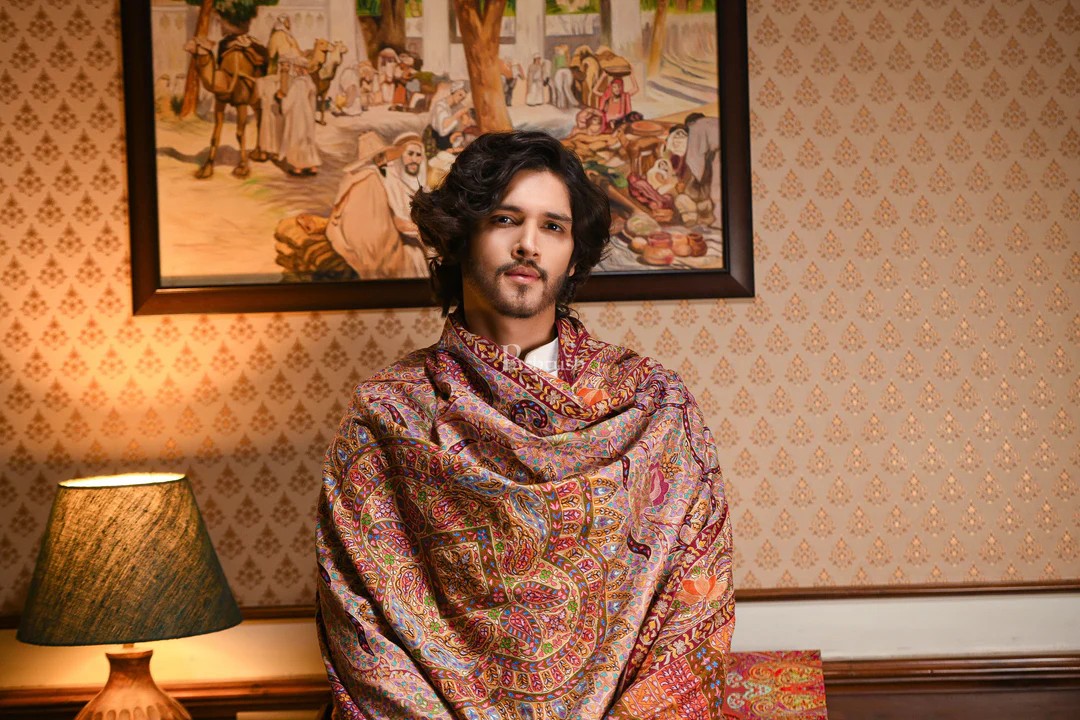
Kalamkari shawls are more than just pieces of fabric; they are the epitome of intricate craftsmanship and cultural heritage. Originating from India, specifically from Andhra Pradesh and Telangana, Kalamkari Shawls showcase hand-painted and block-printed designs that narrate stories of mythological epics, nature, and folklore. The term ‘Kalamkari’ itself is derived from the Persian words ‘kalam’ meaning pen and ‘kari’ meaning craftsmanship, highlighting the meticulous pen-work involved in creating these masterpieces.
The process of making a Kalamkari shawl is labor-intensive and requires a great deal of patience and skill. The fabric, usually cotton or silk, is first treated with a solution of cow dung and bleach, making it ready to absorb natural dyes. Artists then use bamboo or date palm sticks, sharpened at one end and tied with a piece of cotton cloth, to sketch the intricate designs. Each step involves careful execution, from dyeing the fabric to applying the outlines and filling in colors.
One of the fascinating aspects of Kalamkari Shawls is the use of natural dyes. These dyes are derived from plants, roots, leaves, and even minerals, making the shawls eco-friendly. For instance, black color is obtained from jaggery and iron fillings, while yellow comes from pomegranate peels. This not only adds to the authenticity of the shawls but also makes each piece unique.
Kalamkari shawls are versatile and can be styled in numerous ways. Whether draped over the shoulders for a traditional look or wrapped around the neck as a stylish scarf, they add a touch of elegance and sophistication to any outfit. These shawls are perfect for both casual and formal occasions, making them a must-have in every wardrobe.
In a world where fast fashion often overshadows traditional craftsmanship, Kalamkari shawls stand out as a testament to the rich cultural heritage of India. By choosing to wear and promote Kalamkari Shawls, one supports the artisans who keep this ancient art form alive and thriving.
